


Please note that you will be taken to a separate website maintained through The University of Chicago Press in order to securely complete your purchase. If you have issues placing your order or need additional assistance, please contact us.
As a nonprofit publisher, we offer multiple pricing options for our Deluxe volumes. Please choose the price that best fits your circumstances.
$100 Supporter Price
This option reflects the volume’s exceptional craft while directly supporting the long-term stewardship of Swedenborg’s works.
Hardcover $100
$60 Shared Price
Shares in a portion of the production and ongoing publishing work.
Use this code in your checkout cart: DELUXE60
$30 At-Cost Price
Reflects the average cost to produce our Deluxe volumes.
Use this code in your checkout cart: DELUXE30
Additional Formats
ePub $24.95
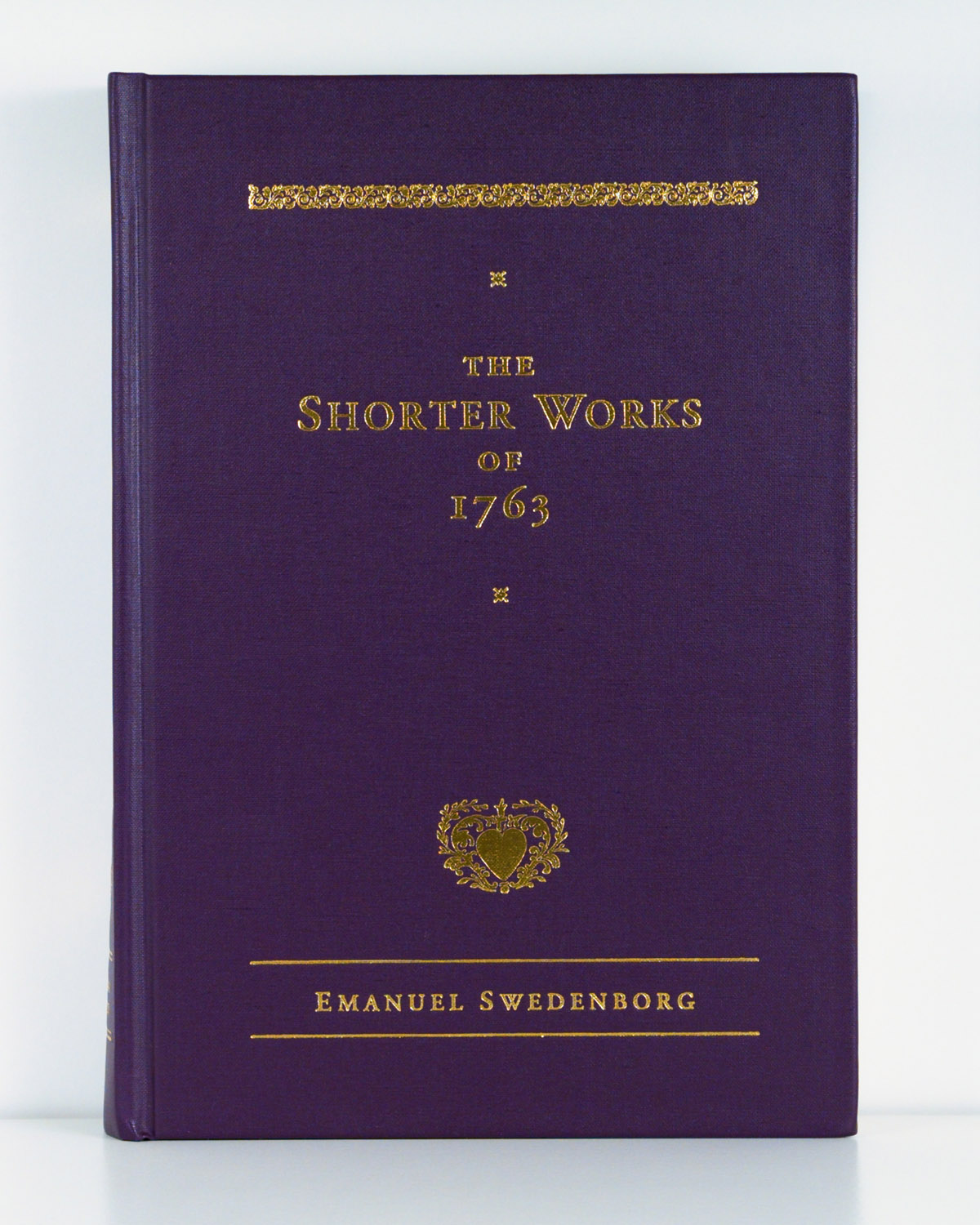
By Emanuel Swedenborg
Translated by George F. Dole
Deluxe Edition Introduction by Jonathan S. Rose
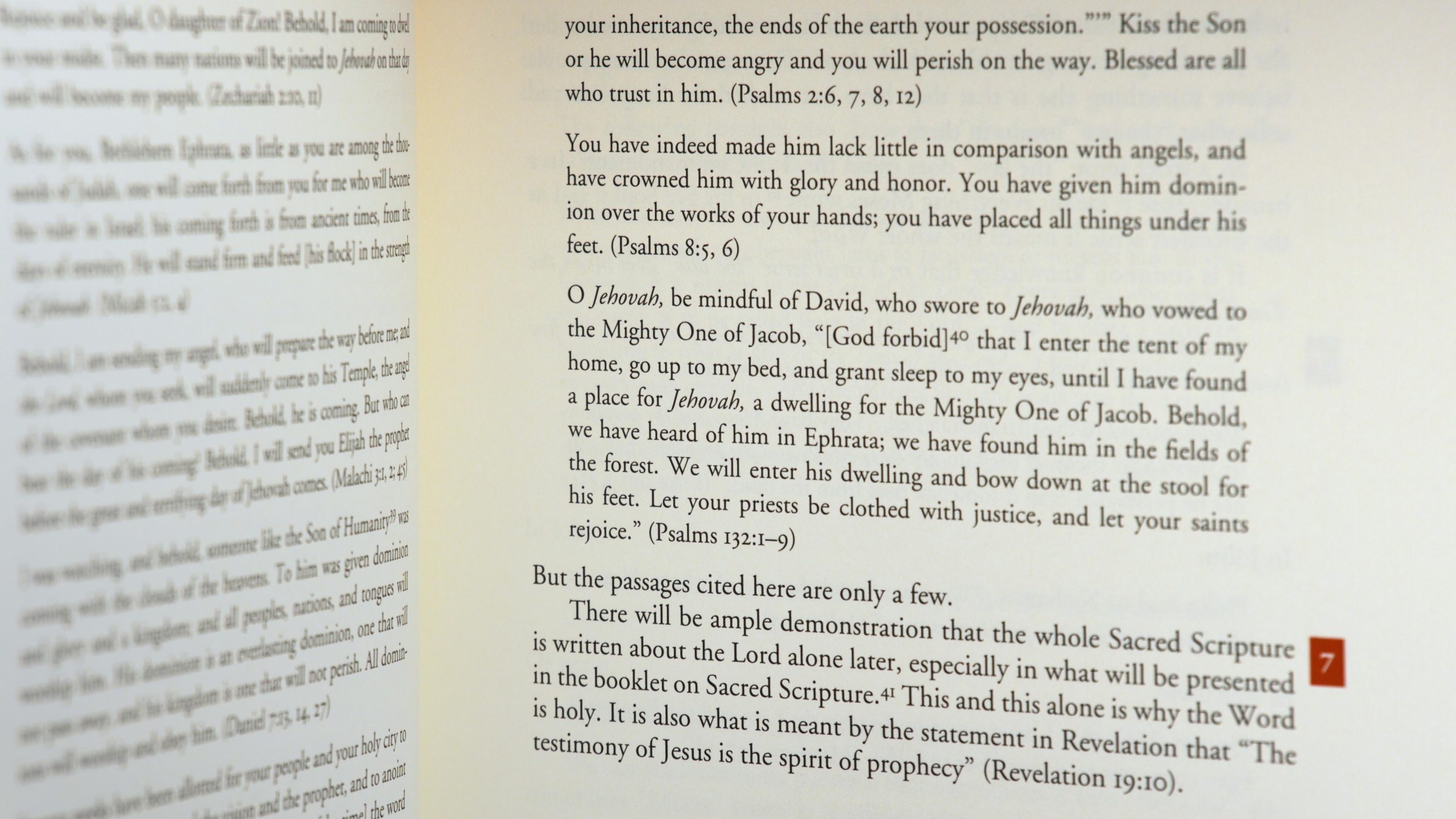
The four main short works in this volume by Swedish theologian Emanuel Swedenborg (1688–1772) form the basic foundation of his thought on God (The Lord), the Bible (Sacred Scripture), spiritual growth (Life) and belief (Faith). They have commonly been published together in other editions under the collective title “The Four Doctrines.” This annotated edition presents exclusive new research into the history of these works and Swedenborg’s publishing and writing strategies.
Hardcover and e-book, 640 pages
Description
The four main short works in this volume by Swedish theologian Emanuel Swedenborg (1688–1772) form the basic foundation of his thought. Although originally printed as if they were stand-alone volumes, they have nearly always been published together, generally under the collective title “The Four Doctrines.”
The Lord discusses the nature of the man known as Jesus Christ, his divine nature, and the meaning of his crucifixion. For Swedenborg, Jesus was not simply a man, but the eternal divine that came to earth for the salvation of humanity.
Sacred Scripture is about the Word, by which Swedenborg means the parts of the Bible that he feels reflect a deep spiritual teaching. Swedenborg believes that study of the Word—which contains a wisdom that predates the written Bible and also transcends it—is the key to humanity’s spiritual development and its eventual union with the Lord.
Life discusses the nature of good and evil and the necessity of shunning sin and evil in order to experience true faith and become a spiritual person. In other words, this work is about how we ought to live.
Faith talks about faith as an acknowledgment of inner truth and the necessity of expressing such faith through good actions rather than simply holding beliefs. Swedenborg also delves into the true nature of charity and the way that it interweaves with faith to produce true goodness.
In addition to these short works, the volume includes a fifth work, which consists of two supplements to previous works by Swedenborg: a brief addition to Last Judgment and a longer addition to Heaven and Hell.
.
Contents
Translator’s Preface, by George F. Dole 1
Works Cited in the Translator’s Preface 7
A Note on Editions and Translations, by Jonathan S. Rose and Stuart Shotwell 9
Selected Works Cited in the Note on Editions and Translations 13
Seeking Greater Engagement: Swedenborg’s Shorter Works of 1763, by Jonathan S. Rose 15 Appendix 1: A Brief Summary of Swedenborg’s Methods of Distribution 93
Appendix 2: Analysis of References to Secrets of Heaven in Swedenborg’s Works between 1758 and 1763 97
Appendix 3: Internal Evidence for the Publication and Presentation Order of the Shorter Works of 1763 101
Appendix 4: Swedish Bishops, 1760–1772 103 Works Cited in the Introduction 104
Short Titles and Other Conventions Used in This Work 109
The Lord
Preface 123
[1] §§1–7 / The Entire Sacred Scripture Is about the Lord, and the Lord Is the Word 125
[2] §§8–11 / To Say That the Lord Fulfilled All of the Law Is to Say That He Fulfilled All of the Word 141
[3] §§12–14 / The Lord Came into the World to Subdue the Hells and to Glorify His Human Nature; the Suffering on the Cross Was the Last Battle by Which He Completely Defeated the Hells and Completely Glorified His Human Nature 146
[4] §§15–17 / The Lord Did Not Take Away Our Sins by His Suffering on the Cross, but He Did Carry Them 152
[5] §18 / The Imputation of the Lord’s Merit Is Nothing More nor Less Than the Forgiveness of Sins That Follows upon Repentance 158
[6] §§19–28 / The Lord as the Divine-Human One Is Called “The Son of God” and as the Word Is Called “The Son of Humanity” 161
[7] §§29–36 / The Lord Made His Human Nature Divine out of the Divine Nature within Himself, and in This Way Became One with the Father 170
[8] §§37–44 / The Lord Is God Himself, the Source and Subject of the Word 188
[9] §45 / God Is One, and the Lord Is God 198
[10] §§46–54 / The Holy Spirit Is the Divine Nature That Emanates from the Lord and Is the Lord Himself 199
[11] §§55–61 / The Athanasian Statement of Faith Agrees with the Truth, Provided That We Understand It to Be Referring Not to “a Trinity of Persons” but to “a Trinity within One Person,” Who Is the Lord 212
[12] §§62–65 / The New Jerusalem in the Book of Revelation Means a New Church 219
Sacred Scripture
[1] §§1–4 / Sacred Scripture, or the Word, Is Divine Truth Itself 229
[2] §§4–26 / There Is a Spiritual Meaning in the Word, Which Has Been Unknown until Now 232 [3] §§27–36 / The Literal Meaning of the Word Is the Foundation, the Container, and the Support of Its Spiritual and Heavenly Meanings 253
[4] §§37–49 / Divine Truth, in All Its Fullness, Holiness, and Power, Is Present in the Literal Meaning of the Word 258
[5] §§50–61 / The Church’s Body of Teaching Is to Be Drawn from the Literal Meaning of the Word and Is to Be Supported by It 267
[6] §§62–69 / By Means of the Literal Meaning of the Word We Unite with the Lord and Form a Companionship with Angels 275
[7] §§70–75 / The Word Is in All the Heavens and Is the Source of Angelic Wisdom 279
[8] §§76–79 / The Existence of the Church Rests on the Word, and Its Quality Depends on the Quality of Its Understanding of the Word 281
[9] §§80–90 / There Is a Marriage of the Lord and the Church in the Details of the Word and a Consequent Marriage of Goodness and Truth 285
[10] §§91–97 / It Is Possible to Wrench Heretical Ideas from the Literal Meaning of the Word, but What Is Damning Is to Convince Ourselves [That They Are True] 294
[11] §§98–100 / The Lord Came into the World to Fulfill Everything in the Word and So to Become Divine Truth or the Word Even on the Outermost Level 300
[12] §§101–103 / Before the Word That We Have in the World Today, There Was a Word That Has Been Lost 302
[13] §§104–113 / By Means of the Word, There Is Light Even for People Who Are outside the Church and Do Not Have the Word 305
[14] §§114–118 / If There Were No Word, No One Would Know about God, Heaven and Hell, Life after Death, and Least of All, about the Lord 309
Life
[1] §§1–8 / Religion Is All about How We Live, and the Religious Way to Live Is to Do Good 315 [2] §§9–17 / No One Can Do Anything Genuinely Good on His or Her Own 321
[3] §§18–31 / To the Extent That We Turn Our Backs on Evil Deeds Because They Are Sins, the Good Deeds We Do Come Not from Ourselves but from the Lord 325
[4] §§32–41 / To the Extent That We Turn Our Backs on Evils Because They Are Sins, We Love What Is True 332
[5] §§42–52 / To the Extent That We Turn Our Backs on Evils Because They Are Sins, We Have Faith and Are Spiritual 335
[6] §§53–61 / The Ten Commandments Tell Us Which Evils Are Sins 339
[7] §§62–66 / All Kinds of Murder, Adultery, Theft, and False Witness, Together with Urges toward Them, Are Evils on Which We Must Turn Our Backs Because They Are Sins 344
[8] §§67–73 / To the Extent That We Turn Our Backs on All Kinds of Killing Because They Are Sins, We Have Love for Our Neighbor 347
[9] §§74–79 / To the Extent That We Turn Our Backs on All Kinds of Adultery Because They Are Sins, We Love Chastity 350
[10] §§80–86 / To the Extent That We Turn Our Backs on All Kinds of Theft Because They Are Sins, We Love Honesty 353
[11] §§87–91 / To the Extent That We Turn Our Backs on All Kinds of False Witness Because They Are Sins, We Love Truth 357
[12] §§92–100 / The Only Way to Abstain from Sinful Evils So Thoroughly That We Develop an Inner Aversion to Them Is to Do Battle against Them 359
[13] §§101–107 / We Need to Abstain from Sinful Evils and Fight against Them As Though We Were Doing So on Our Own 362
[14] §§108–114 / If We Turn Our Backs on Evils for Any Other Reason Than That They Are Sins, We Are Not Turning Our Backs on Them but Are Simply Making Sure They Are Not Visible in the Eyes of the World 365
Faith
[1] §§1–12 / Faith Is an Inner Recognition of Truth 371
[2] §§13–24 / The “Inner Recognition of Truth” That Is Faith Is Found Only in People Who Are Devoted to Caring 374
[3] §§25–33 / Our Knowledge of What Is True and Good Does Not Become Faith until We Are Engaged in Caring. Once We Have a Faith That Is Born of Caring, Though, That Knowledge Becomes a Resource That Gives Form to Our Faith 379
[4] §§34–37 / The [True] Christian Faith in One All-Encompassing View 382
[5] §§38–43 / The Present-Day Faith in One All-Encompassing View 383
[6] §§44–48 / The Nature of a Faith Divorced from Caring 386
[7] §§49–54 / The Philistines Mentioned in the Word Represent People Devoted to a Faith Divorced from Caring 388
[8] §§55–60 / The Dragon Mentioned in the Book of Revelation Symbolizes People Devoted to a Faith Divorced from Caring 391
[9] §§61–68 / The Goats Mentioned in Daniel and Matthew Symbolize People Devoted to a Faith Divorced from Caring 395
[10] §§69–72 / A Faith Divorced from Caring Destroys the Church and Everything It Stands For 400
Supplements
Supplement on the Last Judgment
[1] §§1–7 / The Last Judgment Has Taken Place 405
[2] §§8–13 / The State of the World and the Church before and after the Last Judgment 408
[3] §§14–31 / The Last Judgment on Protestants 412
Supplement on the Spiritual World
[4] §§32–38 / The Spiritual World 419
[5] §§39–47 / The British in the Spiritual World 421
[6] §§48–55 / The Dutch in the Spiritual World 425
[7] §§56–60 / Roman Catholics in the Spiritual World 429
[8] §§61–67 / The Catholic Saints in the Spiritual World 431
[9] §§68–72 / Muslims and Muhammad in the Spiritual World 434
[10] §§73–78 / Africans, and People of Other Religions, in the Spiritual World 436
[11] §§79–82 / Jews in the Spiritual World 439
[12] §§83–85 / Quakers in the Spiritual World 441
[13] §§86–90 / Moravians in the Spiritual World 442
Notes and Indexes
Notes 447
Appendix: The Reference of the Word Canaan in the Bible and in Swedenborg’s Theology, by Lee S. Woofenden 529
Works Cited in the Notes 531
Index to Preface, Introduction, and Notes 541
Index to Scriptural Passages in the Shorter Works of 1763 567
Table of Parallel Passages 587
Index to the Shorter Works of 1763 593
Biographical Note 629
Additional information
| Author | Emanuel Swedenborg |
|---|---|
| Translator | George F. Dole |
| Foreword / Introduction by | Jonathan S. Rose |
| Format | e-book, hardcover |
| ISBN | 978-0-87785-503-3, 978-0-87785-707-5 |
| Length | 640 pages |
| Release Date | Fall 2020 |
| Series | New Century Edition |
Related books
-

Listening to Eternity
-
Secrets of Heaven Vol. 8
-

Survey / Soul-Body Interaction
-
The Moment Is Now
-
Seven Days of Spiritual Evolution